Try Before You Trust: The Old-School Business Model That's Making a Surprisingly Timely Comeback
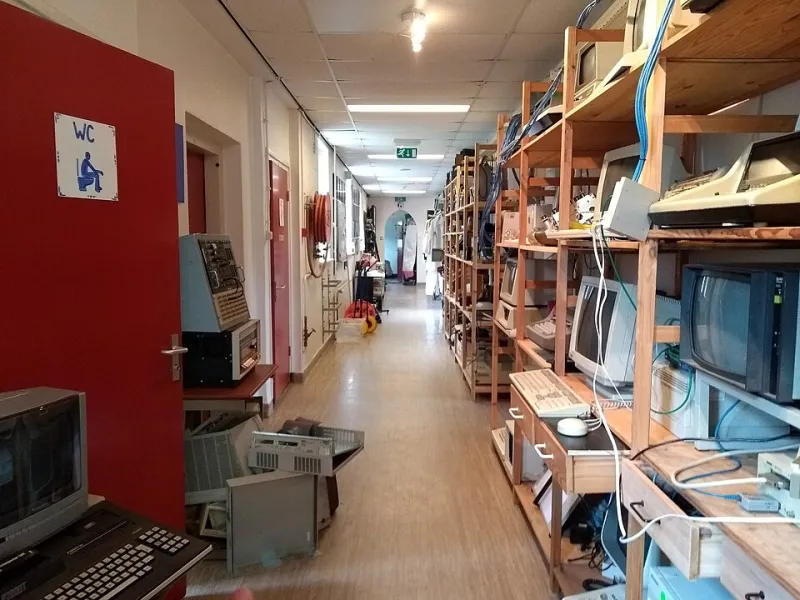
Photo: jmerelo, CC BY-SA 2.0, via Wikimedia Commons
If you grew up gaming in the early nineties, you probably remember getting a floppy disk — or later a CD — in a cereal box, or finding one taped to the cover of a gaming magazine. Pop it in, and you'd get the first episode of Doom, or Commander Keen, or Jazz Jackrabbit for free. Play as long as you wanted. When you were ready to see what came next, you sent a check to an address printed in the game itself and they mailed you the rest.
This was shareware. It was honest in a way that felt almost radical then, and feels genuinely radical now.
Fast forward to 2024, and a growing number of indie developers are reviving this model — not as a retro gimmick, but as a deliberate philosophical stance against the monetization practices that have made so many players exhausted and suspicious. And based on the communities these developers are building, it's working.
What Shareware Actually Was (And Wasn't)
It's worth being precise here, because shareware gets lumped in with a lot of things it wasn't. It wasn't a demo. Demos were curated vertical slices — cherry-picked levels designed to show a game at its best, often featuring content built specifically for the demo that didn't appear in the final product. Shareware was the actual game. The first episode, the first chapter, the first act — real content, not a marketing construct.
And it wasn't free-to-play. Free-to-play, in its modern form, gives you access to a game while engineering every mechanic around extracting recurring payment. The game is free; the experience of actually enjoying the game costs money, and the costs are often obscured, incremental, and designed to be hard to track.
Shareware was transparent. Here's what you get for free. Here's what you get if you pay. The line was clear. The trust was built in.
Why Players Are Ready for This Again
The timing of this revival isn't accidental. Player sentiment around monetization has been deteriorating for years, and 2024 has been particularly rough. Major publishers have pushed increasingly aggressive battle pass structures, cosmetic storefronts with deliberately confusing premium currencies, and "games as a service" models that effectively hold the complete experience hostage behind ongoing payment.
The backlash has been building. Players are more vocal about feeling manipulated. Review bombs targeting predatory monetization have become a regular occurrence. And a real subset of the gaming audience — particularly the kind of player who grew up with physical media and remembers what it felt like to own a game outright — is actively looking for alternatives.
Indie developers who've been paying attention to this shift are moving to meet it. And shareware, updated for the current distribution landscape, fits the moment almost perfectly.
The Developers Making It Work
The modern shareware revival takes a few different forms. Some developers release a full first chapter or first quarter of their game for free on itch.io or Steam, with a direct purchase option to unlock the rest. Others use pay-what-you-want pricing for the base game with a clear, fixed price for expanded content. A few have experimented with what might be called the "honest demo" — a separate free download that's explicitly labeled as a fraction of the full game, with no content removed or modified for presentation purposes.
What connects all of these approaches is transparency. Players know exactly what they're getting before they commit. There are no surprise mechanics revealed after purchase. No content locked behind a premium tier that wasn't mentioned in the store description. The contract between developer and player is written in plain language.
Developer Maddy Thorson, one-half of the team behind Celeste, has spoken about the importance of player trust as a long-term business asset — the idea that a community built on honest dealing is more valuable and more durable than one built on conversion optimization. That philosophy is increasingly common in the indie spaces where the shareware revival is taking root.
The Economics Actually Make Sense
Skeptics might wonder whether giving away a meaningful chunk of your game actually translates to sustainable revenue. The data from developers who've tried it suggests it does — sometimes significantly better than premium-only or free-to-play approaches.
The mechanism is straightforward: players who've already invested time in your free content and enjoyed it are highly motivated buyers. They're not making a purchase based on a trailer or a review — they're buying a continuation of an experience they've already had. Conversion rates from genuine shareware-style free content tend to be higher than from traditional demos, because the emotional investment is real rather than manufactured.
There's also a community effect. Players who discover a game through its free component and then purchase the full version are the most enthusiastic evangelists. They've been treated fairly. They tell people. Word-of-mouth from this kind of player is qualitatively different from the word-of-mouth generated by a launch-day sale.
The Nostalgia That Isn't Really Nostalgia
It would be easy to frame this as pure retro sentiment — developers who grew up on id Software and Apogee trying to recreate the feeling of their childhood gaming experiences. And sure, there's probably some of that going on. The shareware era has a genuine warmth to it, a sense of a time when the industry felt smaller and more personal.
But the revival is being driven by something more immediate than nostalgia. It's being driven by a recognition that the current dominant models — aggressive free-to-play, locked premium, live service — have created a player base that defaults to suspicion. When a new game is announced, a significant portion of the audience's first question is: what are they hiding? What's the catch? Where's the monetization?
Shareware doesn't create that question. The catch is right there on the page: the full game costs money. Everything else is yours for free. It's an answer that's so old it feels new, and for players worn down by years of discovering the catch after the fact, it lands like a breath of fresh air.
Small Screens, Honest Deals
The games embracing this model tend to be exactly the kind of thing we love around here — compact, intentional, built by small teams who care more about their reputation than their quarterly numbers. They fit in a tiny window on your browser or your laptop screen. They don't need to be massive to be meaningful.
The shareware model was always a bet on quality. If the free part is good enough, people will pay for the rest. That bet hasn't changed. The audience willing to take it is just bigger now — and hungrier for something honest — than it's ever been.