When 100 Hours Becomes 10 Minutes: The Tug-of-War Between Indie Devs and Speedrunners

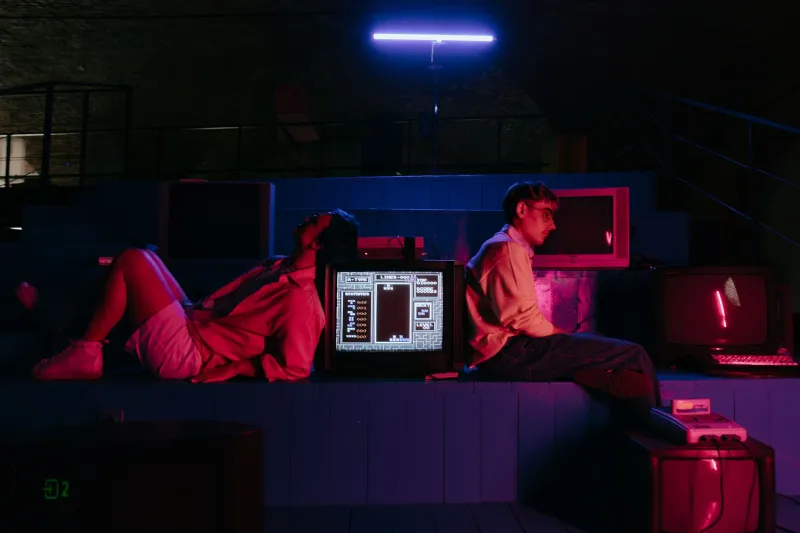
Photo: speedrunner playing retro indie video game with timer on screen, via www.nationalpark-harz.de
There's something almost poetic about watching a speedrun of a game you've sunk forty hours into. A runner zips through an opening area you spent three hours exploring, clips through a wall you didn't know was hollow, and triggers the final cutscene before you've even finished your coffee. It's impressive. It's a little unsettling. And depending on who made the game, it's either a badge of honor or a quiet nightmare.
Indie games have become some of the most beloved entries in the speedrunning community — not in spite of their small scale, but because of it. A solo developer or tiny team building a game in their spare time simply cannot anticipate every edge case, every pixel-perfect jump, every way a determined player might fold the game's logic in half. That gap between intention and execution? That's where speedrunners live.
The Anatomy of a Broken Game (In the Best Way)
Take a game like Celeste — not a no-name release, but a useful example of how a small team's meticulous design still couldn't fully predict how players would interact with it. The mechanics were tight, the levels were intentional, and the difficulty curve was carefully tuned. Speedrunners found ways around almost all of it within weeks of launch. Hyper-dashing through walls. Skipping entire chapters through precise movement chains. The developers at Maddy Makes Games didn't rage-patch everything into oblivion. Instead, they leaned in, eventually adding an assist mode while leaving the sequence breaks largely intact.
That response — embrace the chaos, let it coexist — isn't universal, but it's become something of a philosophy among indie devs who've seen their games adopted by the speedrunning community. The logic makes sense: if someone loves your game enough to spend 200 hours finding its seams, maybe those seams are part of the charm.
But not every developer feels that way. And honestly? That's fair too.
The Quiet Patcher
For every dev who celebrates a good sequence break, there's another who patches it out before most players even know it existed. You won't usually see a changelog entry that says "removed unintended skip in Act 2 that bypassed the emotional core of the game." It'll be buried under "miscellaneous bug fixes" or "improved collision detection in forest area."
This is where things get genuinely complicated. When an indie developer builds a narrative-heavy game — the kind with branching dialogue, slow-burn character development, and a final-act revelation that only lands if you've earned it — a speedrun that skips straight to the ending isn't just a mechanical exploit. It's a bypass of the artistic intent. The developer wasn't building a puzzle to be solved in the most efficient way possible. They were building an experience meant to unfold over time.
Is it wrong for them to patch that out? Most of the speedrunning community would say yes — or at least, that it's a bummer. The counterargument is that the game belongs to its creator in a way that matters. A painter doesn't have to be okay with someone cutting their canvas into smaller pieces just because the result is technically interesting.
The Community That Keeps Games Alive
Here's the tension that makes this whole conversation worth having: speedrunners are often the people keeping small indie games visible long after their initial release window closes. The games that develop active speedrunning communities on Twitch and YouTube get a kind of ongoing publicity that no marketing budget could buy. New players discover a game through a world record run, get curious, buy it, and play it the "normal" way. The speedrunner becomes an unlikely ambassador.
For a tiny studio with no PR team and a game that launched to modest sales, that's not nothing. That's survival.
Some developers have caught onto this and started designing with speedrunners in mind — not by making the game easier to break, but by building in official time trials, leaderboard support, or even dedicated "no cutscene" modes that respect both audiences. It's a small-screen solution to a big-picture problem: how do you honor the player's desire for mastery without undermining the experience you built?
What the Glitches Actually Reveal
There's a subset of speedrunning culture that's particularly relevant to indie games: the "glitchless" or "any%" debate. Any% runs use whatever works — glitches, skips, out-of-bounds exploits, all of it. Glitchless runs are a kind of enforced respect for the developer's intended path. The fact that both categories exist says something interesting about how the community itself thinks about artistic intent.
Runners who prefer glitchless categories often describe it as wanting to understand the game as it was designed, then beat it as efficiently as possible within those rules. It's a different kind of mastery. And for indie games where the "intended path" is actually the point — where the journey through a hand-crafted world is the whole deal — glitchless runs can feel like a more honest engagement with what the developer made.
Neither camp is wrong. But the existence of both suggests that even speedrunners are wrestling with the same question developers are: what is this game, really, and what does it mean to play it?
Where the Line Gets Drawn
The most interesting cases are the ones where developers respond publicly to speedrun discoveries. A few years back, it became something of a tradition for indie devs to pop into speedrunning Discord servers or comment on YouTube videos to react to newly discovered skips — sometimes with genuine delight, sometimes with thinly veiled pain. "I spent four months on that dungeon" has become a kind of meme, but it points at something real.
The games that handle this tension best tend to be the ones where the developer has thought about what their game actually is at its core. If the core is mechanical challenge, speedrunners are basically your most engaged players. If the core is narrative or atmosphere, the calculus changes. Knowing the difference — and being honest about it — seems to be the thing that separates developers who thrive in this dynamic from the ones who feel like their work got disrespected.
A Window Worth Looking Through
At Tiny Windows Games, we spend a lot of time thinking about what makes small games matter. And the speedrunning conversation is, in a weird way, one of the purest expressions of why indie games connect so deeply with people. These aren't passive experiences. They're spaces people move through, test, break, and rebuild in their heads.
When a runner finds a skip that shaves eight minutes off a world record in a game a solo dev built over two years, both things are true at once: the dev's work was profound enough to earn that obsession, and the runner's obsession is its own kind of tribute. The tension between them isn't a problem to solve. It's proof that the game meant something.
Small screens, big memories — and apparently, some of the most creative ways to blow past the credits screen anyone has ever thought up.