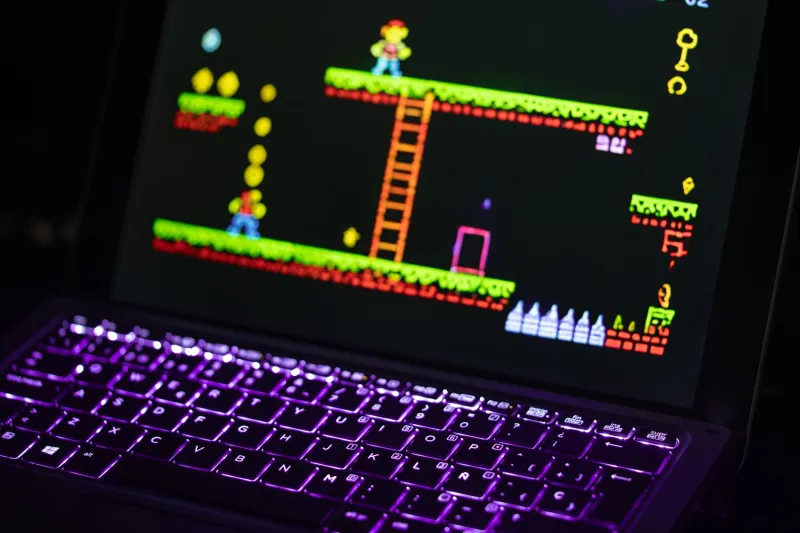
Four Shades of Gray, Infinite Possibilities: How the Game Boy Became Indie Design's Secret Bible
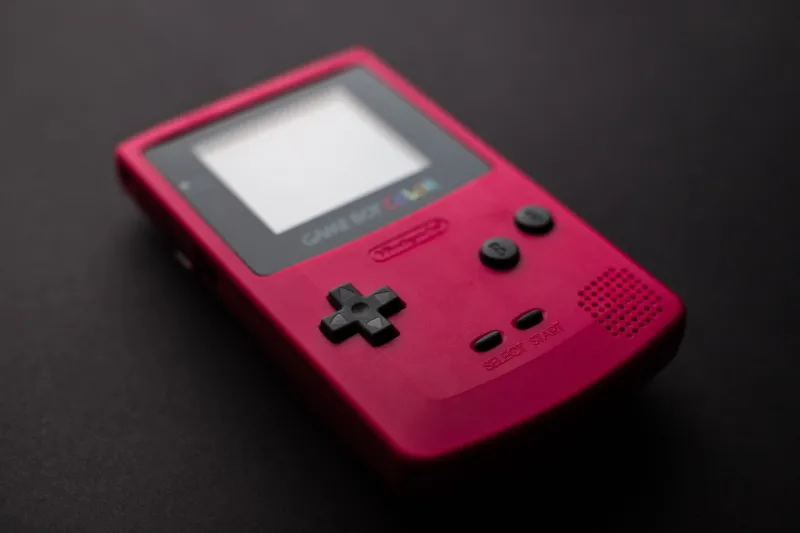
Picture the hardware specs for a moment. A 2.6-inch screen. A palette of exactly four shades of green-tinted gray. A processor running at roughly 4 MHz — slower than the watch on your wrist. A cartridge format that, in its early days, could hold less data than a single low-resolution photo on your phone.
By every measurable standard, the original Game Boy was a machine built around what it couldn't do. And yet, nearly four decades after Nintendo shipped that first chunky gray brick, indie developers across the country are voluntarily locking themselves inside those same tiny walls — and producing some of the most inventive games you'll play this year.
This isn't nostalgia for its own sake. There's something deeper going on, and it's reshaping how a whole generation of designers thinks about creativity itself.
The Box That Builds Better Ideas
Talk to almost any indie developer who's worked within Game Boy-style constraints, and you'll hear a version of the same thing: the limits didn't slow them down. The limits saved them.
When you can only use four shades, every pixel has to pull serious weight. When your storage budget is measured in kilobytes rather than gigabytes, you can't hide weak design under layers of content. When your screen is the size of a playing card, you have to make every square inch of visual real estate count. These aren't handicaps — they're editorial decisions baked into the hardware itself.
Modern game development, by contrast, offers something close to infinite canvas. High-definition textures, sprawling open worlds, branching narrative trees, orchestral soundtracks — all of it is technically within reach for a solo developer with the right tools and enough time. But that abundance creates its own problem. When everything is possible, nothing forces you to make a hard call. Scope creeps. Features multiply. The original idea gets buried under layers of "wouldn't it be cool if."
The Game Boy never let that happen. It made the hard calls for you.
Games That Prove the Point
You don't have to take anyone's word for it. The evidence is shipping on Steam and itch.io right now.
Toads of the Bayou, released in 2024, is a deck-building strategy game that deliberately restricts itself to a monochrome visual style and designs every mechanic around a limited action economy — no sprawling skill trees, no endless upgrade paths, just tight decisions inside a small system. Players consistently describe it as "surprisingly deep" for something that looks so simple. That depth didn't happen despite the constraints. It happened because of them.
Then there's the entire GBDK (Game Boy Development Kit) homebrew scene, which has exploded in the last few years. Developers are writing actual, functional Game Boy cartridges in 2024 — games that run on original 1989 hardware — not because it makes commercial sense, but because the discipline required to ship something under those conditions makes them dramatically better designers. Spend six months trying to fit a puzzle game into 32 kilobytes, and you'll never waste a line of code again.
Even games that don't explicitly reference the Game Boy are absorbing its lessons. Balatro, one of the most talked-about indie releases of 2024, is built around a deliberately constrained ruleset that generates enormous complexity from a small number of interacting systems. The visual presentation is minimal. The loop is tight. It's a Game Boy philosophy running on modern hardware.
Why Designers Keep Coming Back to the Well
Sam Farmer, an indie developer based out of Portland who's shipped two games using strict Game Boy-era visual constraints, describes the appeal in practical terms. "When I give myself unlimited options, I spend half my dev time just making decisions about what not to include," he says. "When I set the rules upfront — four colors, this resolution, this screen size — those decisions are already made. I can just focus on whether the game is actually fun."
That's a sentiment echoed across the indie community. Constraints function as a pre-made design document. They answer questions before you even think to ask them. Should this game have a complex inventory system? Well, can you represent a complex inventory system in four shades of gray on a 160x144 pixel screen without it becoming a nightmare to read? No? Great. Moving on.
There's also something to be said for the way limitations force a kind of honesty about what a game actually is. A Game Boy game can't hide behind spectacle. It can't dazzle you with a cutscene when the core loop starts feeling thin. Every session of play is a direct test of whether the fundamental idea holds up — and that pressure produces stronger ideas.
The Nostalgia Factor (And Why It's Only Part of the Story)
It would be easy to write all of this off as millennial nostalgia — a generation of developers who grew up with Game Boys in their pockets now making games that scratch that particular itch. And sure, that's real. The aesthetic hits different if you spent third grade hunched over Pokémon Red under your desk.
But the developers driving this movement aren't just chasing a feeling. They're making a design argument. The Game Boy's constraints weren't arbitrary — they were the result of Nintendo engineering a device for a specific context: portable play, limited battery life, outdoor visibility, one-handed operation. Every technical restriction mapped to a real-world need. And the games that succeeded on that platform succeeded because their designers worked with those needs rather than against them.
That's the lesson modern indie developers are actually importing. Not the green-gray palette as a vibe, but the underlying philosophy: understand your constraints, embrace them as design tools, and make something that couldn't exist any other way.
Small Windows, Sharper Focus
There's a reason the Game Boy outsold its technically superior competitors. The Sega Game Gear had a backlit color screen and blew through six AA batteries in five hours. The Atari Lynx had more processing power and almost no library worth playing. The Game Boy had Tetris — a game so perfectly matched to its platform's constraints that the two felt like they were designed for each other. Because they were.
That's the template. Not the specs, not the aesthetic, not the nostalgia — the relationship between a game and the boundaries it lives inside.
The indie developers treating the Game Boy like a design bible aren't looking backward. They're using a very old lesson to build something genuinely new: games that know exactly what they are, games that commit to their own rules, games that deliver more because they promised less.
Four shades of gray. Infinite possibilities. The math still works.