Slowdown on Purpose: Why Some Indie Devs Are Building Games You Simply Cannot Rush

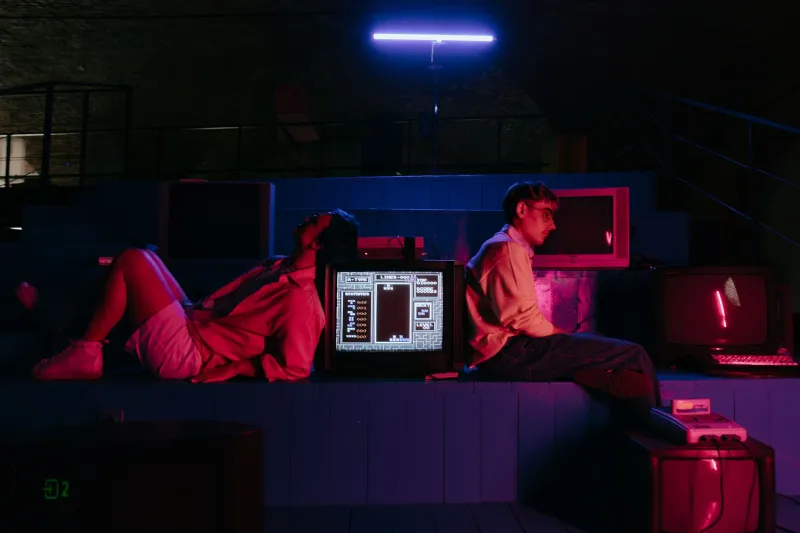
Photo: Joel McDonald (Polyculture), CC BY-SA 3.0, via Wikimedia Commons
There's a certain kind of pride that speedrunners carry into every game they touch. The clock starts, the route gets optimized, and somewhere in a Discord server, a community begins dismantling a developer's carefully constructed world one pixel-perfect skip at a time. For years, that dynamic felt like an inevitability — make a game, watch it get broken. But something is shifting.
A growing number of indie developers aren't patching exploits or locking down their code in a war against the stopwatch crowd. Instead, they're doing something far more interesting: they're designing games that structurally resist being rushed. Not through walls or timers or punishing fail states, but through the actual texture of the experience itself.
Call it unrushable design. And it might be one of the more philosophically rich conversations happening in indie development right now.
The Difference Between Unbreakable and Unrushable
It's worth drawing a clear line here, because these are genuinely different things. An unbreakable game is a technical achievement — tight code, no exploitable collision errors, no out-of-bounds glitches. Developers have been chasing that for decades, and speedrunners have been winning that chase just as long.
An unrushable game is something else entirely. It's a design philosophy that asks: what if the game simply requires you to be present? Not because a wall blocks your path, but because the experience only reveals itself through patience, attention, or emotional engagement.
Think about a game where the dialogue changes based on how long you wait before responding. Or a puzzle that can only be solved once you've absorbed information scattered across multiple slow, quiet scenes. Or a world where the most meaningful content — the stuff players actually talk about afterward — only surfaces if you stop trying to optimize and start trying to feel.
These aren't accidental design quirks. Increasingly, they're intentional.
Why Now?
The indie scene has always had a complicated relationship with speedrunning. On one hand, having your game run is a badge of honor — it means someone cared enough to study every seam in your world. On the other hand, watching a 40-hour narrative experience reduced to a 12-minute highlight reel can feel like a specific kind of loss, especially for developers who poured deeply personal stories into their work.
But the shift toward unrushable design isn't really about defensiveness. Developers who are exploring this space tend to frame it less as protection and more as intention. The question isn't how do we stop speedrunners — it's what does it mean for a player to actually experience what we made?
That's a meaningful distinction. One is reactive. The other is creative.
The rise of narrative-forward indie games has accelerated this thinking considerably. When your game's value lives in its atmosphere, its pacing, its emotional beats — the way a piece of music lands differently at minute three than it does at minute one — speed becomes the enemy of the thing itself. You can't skip to the end of a feeling.
The Tools of Unrushable Design
So what does this actually look like in practice? The techniques vary, but a few patterns are emerging.
Pacing locked to perception. Some developers are building games where progression depends not on completing an action, but on observing one. A door that opens only after you've stood in a room long enough for ambient audio to complete its cycle. A character who only shares crucial information once their animation has fully played out — and no amount of button-mashing skips it.
Emotional gating. This is trickier, but it's being explored. Games that track player behavior — not to punish, but to unlock. Content that only becomes accessible once a player has demonstrated they've engaged with earlier material in a genuine way, like revisiting a location or reading optional lore entries.
Non-linear density. Some developers are distributing meaning so thoroughly across a game's space that skipping anything creates genuine gaps in understanding. Not a locked door, but a missing context. You can rush through — but the ending won't land, and you'll know it.
Rhythm as mechanic. Certain indie games are embedding timing not into challenge, but into comprehension. The game breathes at a specific tempo, and playing against that tempo produces a less coherent experience. You're not punished. You're just... lost.
The Player Side of This Conversation
Here's where it gets complicated. Not every player who moves quickly through a game is disrespecting it. Some people replay games on speed. Some have limited time and are doing their best. Some are neurodivergent and process experiences differently. Unrushable design, if handled clumsily, can tip from thoughtful into gatekeeping — and that's a real concern worth naming.
The developers navigating this most thoughtfully seem aware of that tension. The goal isn't to trap players or demand they engage on a single prescribed timeline. It's closer to this: building a game where the most rewarding path is also the attentive path. Where slowing down isn't a punishment for going fast — it's just genuinely better.
There's a difference between a game that locks you out and a game that rewards you for staying. The best examples of unrushable design lean hard into the second category.
What This Means for the Indie Scene
For a community that has long celebrated the idea that small games can contain enormous worlds, unrushable design feels like a natural evolution. These are developers who already understand that constraint can be generative — that a tiny window into a fictional universe can feel bigger than a hundred-hour open world if it's crafted with care.
The speedrun community isn't going anywhere, and honestly, it shouldn't. There's real artistry in route optimization, real community in the leaderboard grind. But the indie space is large enough to hold both — games built to be broken and games built to be breathed in.
What's exciting about the unrushable movement isn't that it's anti-speedrun. It's that it's pro-experience. It's developers asking, sincerely, what it would feel like if a player gave their game the same attention they gave it while making it.
That's not a hostile question. It's a hopeful one.
And in a landscape full of games competing for every spare minute of attention, a game that asks you to slow down — and makes slowing down genuinely worthwhile — might just be the most radical thing a developer can build right now.