Fifteen Seconds of Fame: How TikTok and YouTube Shorts Are Resurrecting Forgotten Indie Games
There's a particular kind of heartbreak that indie developers know well. You spend two years building something strange and beautiful, you launch it on a Tuesday, and then... nothing. A handful of sales. A couple of forum posts. Crickets. The game doesn't die, exactly — it just sits there, patient and invisible, waiting for someone to notice.
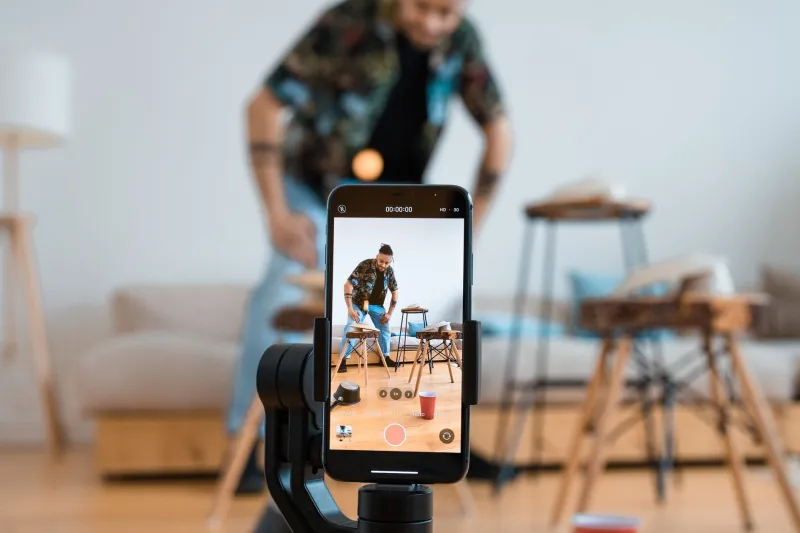
For a growing number of indie titles, that wait is finally paying off. Not through a glowing review in a major outlet, not through a Twitch streamer's sponsored playthrough, but through a fifteen-second vertical video posted by someone who just thought the game looked kind of wild.
Welcome to the era of short-form resurrection.
The Algorithm Nobody Predicted
When TikTok started eating the internet's attention span around 2020, most gaming industry observers figured it would be great for big, flashy titles — the kind of games that look incredible in a ten-second clip. What nobody fully anticipated was how the platform's recommendation engine would develop a soft spot for the weird and the niche.
The logic, once you think about it, makes sense. TikTok and YouTube Shorts don't reward production budgets. They reward reaction. And nothing triggers a reaction quite like stumbling across a game you've genuinely never heard of doing something completely unexpected. A tiny pixelated horror game where the UI itself becomes the monster. A puzzle title where the rules are never explained and the player has to figure everything out. A retro-styled RPG with dialogue so sharp it stops you mid-scroll.
These are exactly the kinds of games that mainstream gaming coverage has historically struggled to cover. They're too odd, too small, too hard to contextualize in a 500-word preview. But in fifteen seconds? They're perfect.
Case Study: Fear & Hunger Finds Its People
Fear & Hunger, a brutally difficult Finnish RPG dungeon crawler released in 2018, is one of the clearest examples of the short-form revival effect. For years, it existed almost exclusively as a cult recommendation passed between extremely online horror fans. Then TikTok got hold of it.
Content creators started posting clips of the game's most shocking moments — the permadeath, the grotesque enemy designs, the complete refusal to hold the player's hand — and the reactions were pure gold. Shock, confusion, laughter, genuine horror. The comment sections filled up with people asking where to find it. The developer, Miro Haverinen, reported a significant sales spike years after the original launch. A sequel followed. A community that had been tiny and insular suddenly had thousands of new members trying to figure out how to survive the first dungeon.
What made it work wasn't polish. It was personality. The game had a distinct, uncompromising vision, and short-form video was the first medium that could communicate that vision instantly.
The Clip That Keeps on Giving
It's worth understanding why vertical video works differently than traditional Let's Play content for these kinds of games. A two-hour YouTube playthrough requires a viewer to commit. They need to already be interested. Short-form content flips that dynamic — it creates interest first, then invites the deeper dive.
Games like Inscryption, Omori, and Ultrakill all experienced secondary viral moments on short-form platforms well after their initial launches. In each case, a specific mechanic, scene, or moment got clipped, spread, and generated a wave of first-time players who then went back to long-form content to learn more. The short clip wasn't the destination. It was the door.
For developers, this changes the calculus around what makes a game "marketable." The old wisdom was that you needed a strong trailer and a press kit. The new reality is that you need at least one moment — one mechanic, one visual gag, one genuinely surprising thing — that can live on its own for fifteen seconds and make someone stop scrolling.
Small Devs, Unexpected Strategies
Some indie developers have started building with this in mind, though the most interesting cases are usually accidental. Buckshot Roulette, a lo-fi horror game about a demonic version of Russian roulette, blew up on TikTok in early 2024 almost entirely through user-generated content. Players filmed themselves and their friends reacting to the game's tension in real time. The developer, Mike Klubnika, hadn't designed the game for social media. He'd designed it to be tense and weird. TikTok did the rest.
Other developers have taken more deliberate approaches. Some have started seeding their games with specific "clip-worthy" moments — a surprising mechanic reveal, an unexpected tonal shift, a visual that genuinely doesn't look like anything else — and then quietly making sure those moments happen early enough that a new player will reach them quickly.
It's a fascinating evolution of the old speedrunner-bait design philosophy. Instead of optimizing for a five-minute highlight reel, you're optimizing for a fifteen-second hook.
What This Means for the Rest of Us
For players, the short-form revival is genuinely good news. Games that deserved attention and didn't get it are getting second chances. Communities that were tiny are growing. Developers who were ready to walk away from game-making are finding out that their work resonated with people after all — just on a delay.
There's something that feels very on-brand for the indie world in that story. These are games built by people who weren't chasing trends or optimizing for algorithms. They were making something honest and specific, and then waiting to see if it found its audience. Sometimes that audience just needed a different window to look through.
A tiny window, even.
The games were always there. The platforms just finally figured out how to show them to the right people at the right moment. And in a landscape where discoverability has always been indie gaming's biggest unsolved problem, that's not a small thing. That's everything.
So the next time a fifteen-second clip of some bizarre little game stops you mid-scroll — the one with the weird art style and the mechanics you can't quite parse from a single viewing — maybe just follow the rabbit hole. There's a decent chance a developer somewhere is about to have the best week of their career.