Designed to Destroy Friendships: The Indie Devs Who Engineer Chaos on Purpose
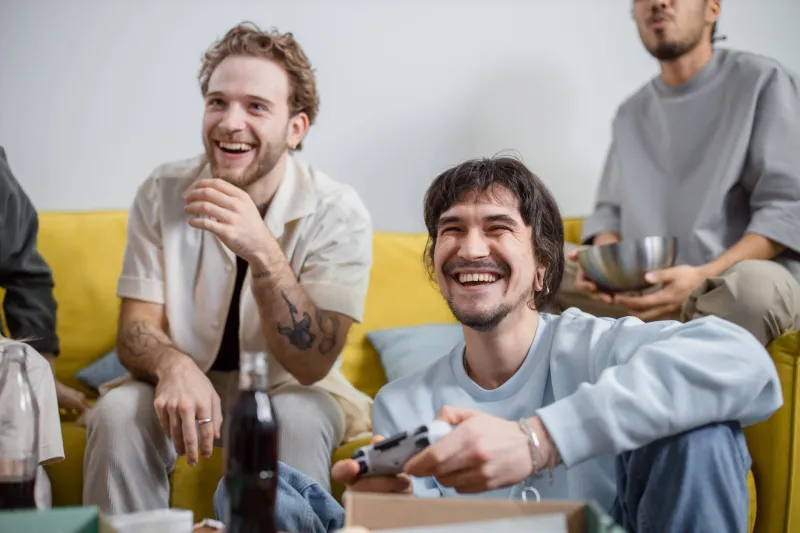
It was supposed to be a chill Saturday night. Pizza, drinks, four friends crowded around a TV. Three hours later, someone had rage-quit twice, two people weren't speaking, and everybody was already arguing about who got to pick the next game. Nobody left. Nobody wanted to.
That's not a bug in modern indie couch multiplayer design. That's the whole point.
The Friendship Killer as a Design Document
There's a lineage here that stretches back to Mario Kart's blue shell and GoldenEye's screen-peekers. But indie developers have taken that DNA and pushed it somewhere wilder — smaller teams, fewer rules, and a whole lot more willingness to let things get genuinely ugly between players.
The goal, for a growing number of indie creators, isn't balance. It's drama.
"Balanced games are satisfying," says one developer behind a chaotic arena brawler that became a word-of-mouth hit on Steam. "But dramatic games are remembered. I want people to talk about what happened at game night for weeks. If everything's fair, nothing's a story."
That philosophy — call it engineered mayhem — shows up in the mechanical DNA of some of indie gaming's most beloved couch titles. Power-ups that punish the leader. Betrayal mechanics baked right into the core loop. Maps that randomly shift mid-round. These aren't accidents. They're architecture.
The Asymmetry Arms Race
One of the most reliable tools in the chaos developer's kit is asymmetrical design — giving players fundamentally different abilities, roles, or resources and watching the social fallout unfold.
In theory, asymmetry creates variety. In practice, it creates accusations.
"You gave them that power?" is practically a genre of its own at this point. When one player's character can temporarily steal another's controls, or when a random card flip hands someone an ability that feels borderline broken, the game stops being about reflexes and starts being about grievances.
Developers who lean into this know exactly what they're doing. The perceived unfairness — even when it's mathematically balanced across a full session — feels personal in the moment. And personal is memorable.
One indie team that released a card-driven party brawler described their playtesting process as essentially "stress-testing friendships." They'd watch groups play, take notes not on win rates but on volume — how loud did the room get? When did people stand up? Which mechanic made someone point at the screen?
"If nobody got upset, we cut it," one of the designers explained. "Not because we wanted people to be miserable, but because 'nobody got upset' meant nobody cared."
The Betrayal Button
Perhaps the boldest move in the engineered chaos playbook is the explicit betrayal mechanic — a designed moment where a teammate can, should they choose, absolutely wreck someone they've been working alongside.
These moments are almost always optional. Almost always regretted. Almost always repeated.
The psychology isn't complicated: when a game hands you a button that says "you could betray your friend right now," it creates tension even before you press it. The will-they-won't-they dynamic between players becomes its own mini-drama layered on top of whatever's actually happening on screen.
The most effective betrayal mechanics aren't ones that feel forced — they're the ones where the game creates a situation so tempting that the betrayal feels almost logical. Almost justified. "I had to," is the most common thing said after someone gets backstabbed in a party game. "I had to" is the beginning of a story that gets retold at every subsequent hang.
Player testimonies about these moments read less like game reviews and more like campfire stories. There's always a specific round, a specific power-up, a specific moment where someone made a choice that changed the social temperature of the entire room. Those stories don't happen in single-player experiences. They barely happen in online multiplayer, where physical distance softens the edges. They happen on the couch, in person, where consequences are immediate and eye contact is unavoidable.
Small Games, Big Scenes
What's interesting is how often these legendary couch moments happen around games that barely register on mainstream radar. We're talking titles that fit on a USB stick, built by teams of two or three people, sold for under ten dollars on itch.io or picked up during a Steam sale without much fanfare.
The small scale isn't a limitation here — it's an advantage. A tiny dev team can make decisions that a studio of hundreds couldn't greenlight in a million years. "Add a mechanic where the losing player can sabotage the winner's controls for five seconds" is a sentence that dies in a boardroom. It thrives in a two-person Discord call at midnight.
Independence means indie developers can follow the chaos where it leads without a committee of people worried about review scores or refund rates. The result is games with a rawness and specificity that larger titles can't manufacture.
Why You Keep Coming Back
Here's the thing nobody talks about when they describe a game that "ruined" game night: they're always smiling when they say it.
The ruination is the point. The argument, the dramatic betrayal, the moment someone threw their hands up and said "I'm done" (before picking up the controller again two minutes later) — that's the content. That's what people are actually buying when they buy these games, even if they don't consciously know it.
Friendships, the real durable ones, can handle a little engineered chaos. The games that test them aren't threats to those relationships — they're pressure tests that friendships pass, usually loudly, sometimes with snacks thrown, always with a rematch demanded before the night's over.
Indie developers who understand this aren't making games designed to hurt people. They're making games designed to matter — to create shared experiences so heightened, so specific, so charged with social electricity that they become part of a friend group's mythology.
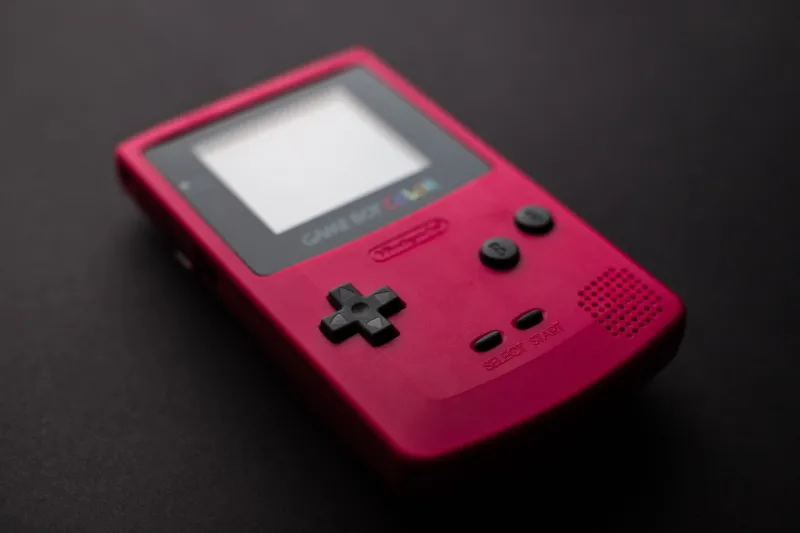
That tiny window on the screen is a lot bigger than it looks when four people are crowded around it, yelling.
The Best Games Leave Marks
A $60 blockbuster might deliver forty hours of content. A $7 indie couch brawler might deliver forty minutes of gameplay and four years of inside jokes.
That's the math indie developers building in the chaos tradition are working with. They're not competing on scope or budget or production value. They're competing on stories — on the likelihood that their game becomes the one your friend group talks about years from now, the one someone brings up at Thanksgiving, the one that gets reinstalled every time a new person joins the group and needs to be initiated.
Engineered mayhem is, at its core, a theory of lasting value. The games that matter are the ones that made you feel something real — even if what you felt, in the moment, was the very specific frustration of watching a friend absolutely destroy you with a power-up you didn't see coming.
Rematch?